

Sesame oil, called "til" oil in Sanskrit, has reportedly been known since Vedic times. The ancient Ayurvedic scholar Charaka, in his well-known treatise on Ayurveda, claims that it is the best of all oils.
Sesame oil pacifies Vata dosha, and is the traditional oil of choice for abhyanga, the daily Ayurvedic self-massage. Additionally, it’s rich in linoleic acid, and has anti-bacterial, anti-inflammatory and antioxidant properties.
Why Sesame Oil Is Valued in Ayurveda
In Ayurvedic tradition, sesame oil is particularly associated with balancing the qualities linked to Vata dosha, which is characterized by dryness, lightness, mobility, and coldness.
Because sesame oil is naturally rich, warming, and moisturizing, it is traditionally used during cooler seasons and as part of routines that emphasize comfort and self-care.
Many people appreciate sesame oil for the way it feels on the skin and the sense of warmth and grounding it can bring to daily wellness rituals.
Sesame oil balances Vata
Sesame oil is especially useful for moisturizing dry, Vata skin types. It’s also useful as a treatment for a dry scalp. Massage sesame oil into the scalp once a week to restore the natural balance and luster of hair.
Organic Sesame Massage Oil
Shop now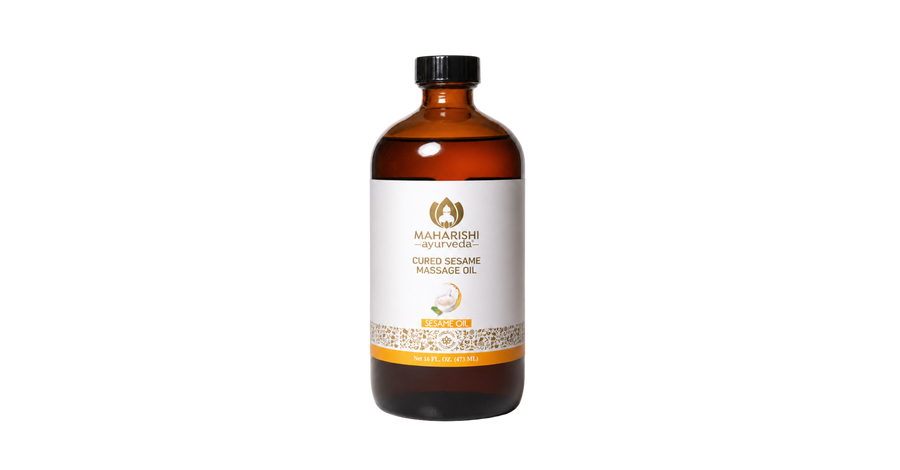
Three traditional ways to use sesame oil
Sesame oil can be a very versatile ally in your efforts toward better health. Here are three ways to add it to your daily routine.
-
Try sniffing it (nasya) to lubricate and protect your nose and sinuses, which are the ventilation systems for your brain. The oil helps clear mucus out of the sinuses. Just dip your little finger in the sesame oil you use for your massage and rub the oil inside of each nostril. Then pinch and release your nostrils rapidly while inhaling sharply.
-
Gargle with it for two minutes (oil pulling). It's not as bad as it sounds! Swish a mouthful of it, then spit it into the toilet and rinse your mouth out with warm water. It feels great, draws out mucus and has been shown to reduce gum disease and tartar build-up.
- Best of all, give yourself a sesame oil massage (abhyanga). Massage it all over your body to release skin impurities, then bathe or shower with warm water. If you have time, a warm bath increases circulation and is a means of further purification.
Sesame oil is a multi-purpose Ayurvedic wellness staple. Explore premium sesame oil products for your daily routine and rituals.
A Traditional Choice for Skin and Hair Care
Sesame oil is commonly used in Ayurvedic self-care routines because of its rich texture and moisturizing qualities.
For Skin
Sesame oil is often applied to:
- Dry or rough areas of the skin
- Skin exposed to seasonal dryness
- Daily self-massage routines
Its smooth texture makes it a popular choice for body oil applications.
For Hair and Scalp
Many Ayurvedic traditions include sesame oil as part of regular scalp and hair care practices.
It is commonly used:
- As a pre-wash hair oil
- During scalp massage rituals
- As part of weekly self-care routines
- Its rich consistency makes it especially popular during colder or drier seasons.
Conclusion
Sesame oil has been a valued part of Ayurvedic tradition for centuries. Its versatility, rich texture, and naturally warming qualities have made it a popular choice for self-care rituals across generations.
Whether incorporated into massage, hair care, or other traditional practices, sesame oil serves as a reminder that wellness can often be found in simple, consistent daily habits.
FAQs
1. What is sesame oil used for?
Sesame oil is commonly used in Ayurvedic practices for self-massage, hair care, skin care, oil pulling, and other traditional wellness routines.
2. How do you use sesame oil for massage?
Warm the oil slightly and apply it to the body using gentle massage strokes. Many people choose to leave it on briefly before bathing.
3. Is sesame oil suitable for body care?
Sesame oil is widely used in Ayurvedic self-care routines because of its rich texture and moisturizing qualities.
4. Can sesame oil be used in traditional nasal oil practices?
Some Ayurvedic traditions include sesame oil as part of Nasya practices. Individuals interested in Nasya may wish to seek guidance from a qualified Ayurvedic practitioner.
5. What are the traditional uses of til oil massage?
Til oil (sesame oil) massage is traditionally used in Ayurveda as part of self-care, relaxation, and wellness routines.
6. What is the difference between sesame oil and til oil?
There is no difference. Til oil is simply another name for sesame oil.
7. Is sesame oil commonly used in men's wellness routines?
Yes. Sesame oil is traditionally used by people of all ages and genders as part of personal care and self-massage practices.


